How to Choose the Right Quad Bike for Dubai Desert Riding
Choosing a quad bike for desert riding is less about picking the biggest machine and more about matching the ride to your experience, the terrain and the way you want to spend the day. Sand changes under the tyres, heat affects both rider and machine, and a route that looks open can still demand steady control. A thoughtful choice makes the outing calmer, safer and far more enjoyable.
Start with the rider, not the machine
Before looking at models or ride formats, be honest about who will be riding. A first timer does not need the same power delivery as someone who has ridden on dunes before. New riders usually do better with a smaller engine, predictable acceleration and a machine that feels light enough to steer without wrestling it. More experienced riders may want stronger torque for climbs and deeper sand, but extra power can become tiring if the route is technical or the ride is long.
Age, height and confidence matter too. A rider should be able to sit with both feet planted comfortably, reach the handlebars without stretching and hold the controls without tension. If a quad feels oversized at a standstill, it will feel worse when the ground slopes or the front wheels slide sideways on a dune face. The right fit gives the rider room to shift weight smoothly, which is a key part of desert control.
Group rides need a second look. If several people with mixed experience are going out together, the pace should be shaped around the least confident rider. A fast quad in the hands of a cautious beginner can create gaps in the group and lead to rushed decisions. Choose a setup that lets everyone stay together and stop without pressure.
Decide what kind of desert ride you want
Desert riding can mean a short introductory loop, a longer dune route, or a mixed outing with photo stops and slower sections. Each one asks different things from the quad. A short ride on gentler terrain can suit a simpler machine. A longer route over rolling dunes calls for better suspension, stronger braking and a rider who can manage fatigue.
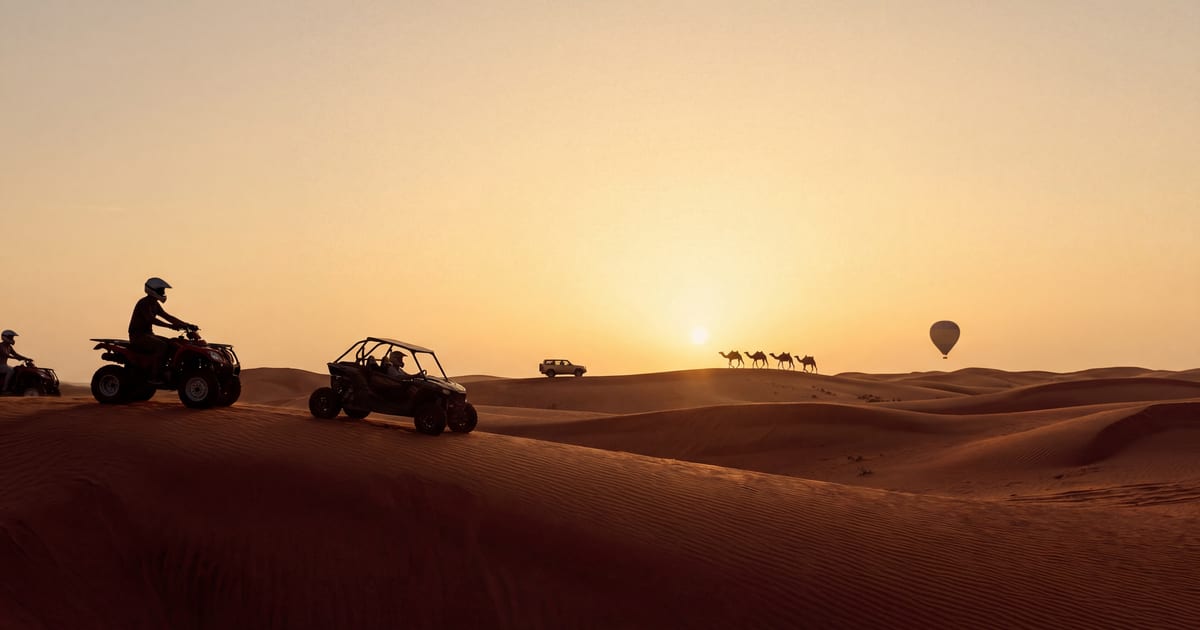
Think about the surface as well. Firm sand is forgiving and easy to steer. Soft sand drags at the tyres and makes the machine feel heavier. Dune climbs reward momentum and smooth throttle use, while descents need patience and a light touch. If the plan includes tight turns between dunes, prioritise handling over straight line speed.
Time of day also changes the experience. Midday heat can make even a moderate ride feel demanding, while cooler hours often bring better visibility and more comfortable riding conditions. Ask how the route is paced and where stops happen. A rider who knows what to expect can settle in rather than trying to adapt on the move.
Match the quad to the terrain
The best all round choice for many riders is a machine with enough low end pull to move through sand without constant revving, paired with suspension that absorbs bumps without throwing the rider off balance. Wide tyres help the quad stay on top of softer ground instead of digging in. A lower tyre pressure can increase the contact patch, but this should be set within the limits recommended for the machine and checked by someone qualified if there is any doubt.
Automatic transmissions are often easier for newcomers because they remove the need to change gear while steering on uneven ground. Riders who enjoy more control may prefer a manual setup, but it takes more coordination. Braking response matters just as much as acceleration. On sand, harsh braking can lock wheels and cause a slide, so the rider needs a quad that responds progressively.
When comparing options with ATV Dubai Desert, focus on how the machine fits the rider and the route rather than chasing the largest engine on the list. A well matched quad encourages smooth inputs, and smooth inputs are what keep a ride controlled on changing dunes.
Check the safety setup before committing
Safety gear is not an accessory to add later. A helmet that fits properly is essential, and it should sit level, feel snug and stay put when the head moves. Gloves improve grip and protect the hands from vibration and brush. Eye protection helps against dust and sand. Long trousers and a sturdy top reduce scrapes and sun exposure. Closed toe footwear with a firm grip is better than sandals or loose shoes.
Ask what safety briefing is given before riding and how instructions are handled during the outing. Clear hand signals or radio communication can matter when the group spreads out. A rider should know how to stop, how to follow the route and what to do if the quad starts to slide or the group pauses unexpectedly.
It is also wise to understand the basic controls before setting off. Know where the throttle, brake, parking brake and engine cut switch are located. Practice gentle steering and slow stops in a flat area if that is allowed. A few calm minutes at the start can prevent confusion later, especially when sand noise and wind make spoken instructions harder to hear.
Look closely at condition and maintenance
A quad that has been looked after usually feels tighter and more predictable. Before accepting a machine, take a slow walk around it. Check that the tyres look evenly worn, the body panels sit properly and there are no obvious leaks under the engine area. Look for bent handlebars, cracked plastic or loose fittings. These signs do not always rule a quad out, but they raise questions about how it has been treated.
Ask when the last routine service was done and whether the machine has had any recent repairs. Brakes, tyres and suspension are especially relevant in desert conditions. If a mechanical issue is suspected, leave the diagnosis and repair to a qualified professional. Riders should not try to adjust or bypass critical parts in the field.
ATV Dubai Desert can be considered as one name among the options a rider may come across while researching desert quad biking. The decision should still rest on practical checks: rider fit, route suitability, safety equipment and clear operating expectations.
Understand the route and the pace
A good ride is shaped by the route as much as the quad. Ask whether the path includes open dunes, firmer desert tracks, stops or technical turns. New riders often enjoy a route with room to breathe and few abrupt transitions. Experienced riders may want more varied terrain, but even then, constant high speed reduces the chance to take in the surroundings and increases fatigue.
Find out how the group handles different skill levels. A route that splits into fast and slow sections can work well if everyone understands the plan. A single mixed group needs patient pacing and regular checks so no one is left guessing. Clear meeting points and a simple process for regrouping are useful on open sand.
Weather can change the feel of the terrain. Wind can blow sand across the route, and strong sun can drain energy quickly. Bring water, wear sun protection and take breaks when needed. If conditions look unsafe, a sensible rider does not push through to keep up. The best choice is always the one that leaves room for good judgement.
Make the final choice with a calm test of fit
When the options are narrowed down, compare them in a practical order. Sit on the quad and check comfort. Ask about the route and how it suits the rider. Confirm the safety equipment and briefing. Look at the machine condition and ask about maintenance. Notice how clear and unhurried the answers feel.
A quad should feel like a tool the rider can manage, not a challenge to conquer. On sand, balance and anticipation count for more than raw speed. Choose a machine that lets the rider stay relaxed, steer with precision and respond to the terrain without panic. That approach turns a desert ride into something worth remembering for the right reasons.